Product Overview
The RJ45 Network Cable Continuity Tester is a simple, reliable, and cost-effective tool designed to quickly verify the wiring integrity of Ethernet network cables. Ideal for installers, IT technicians, electricians, and network engineers, this tester helps identify common cable faults including open circuits, short circuits, crossed pairs, reversed wiring, and incorrect pin terminations.
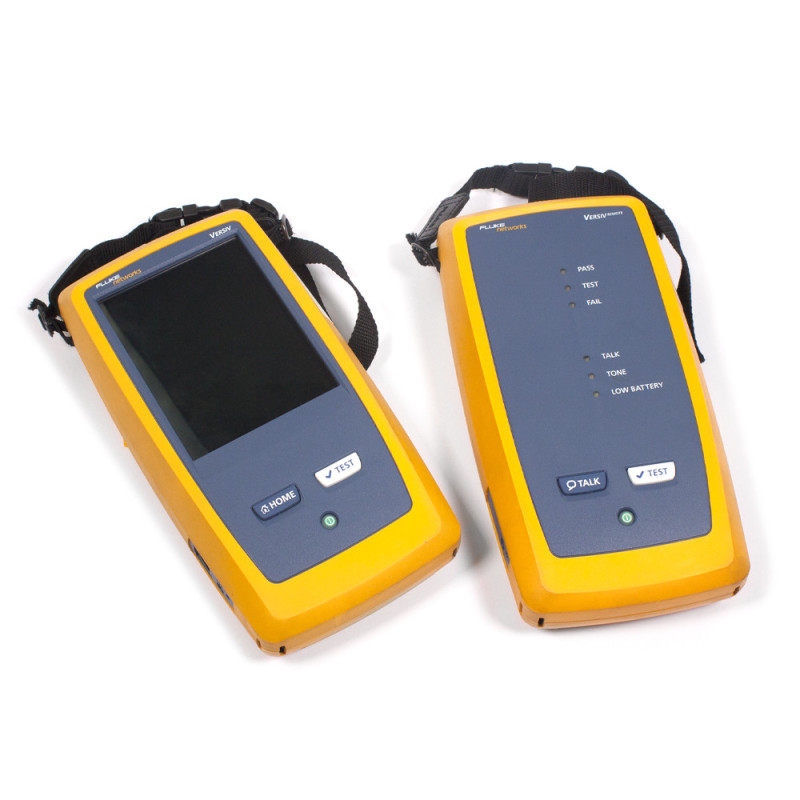
Featuring a compact two-piece design with a detachable remote unit, the tester allows easy verification of installed cabling runs, making it suitable for testing patch leads, structured cabling systems, and permanent link installations. LED indicators clearly display the wiring sequence for all eight conductors plus shield/ground, enabling fast fault diagnosis without the need for specialist equipment.
Whether you're installing new network infrastructure, troubleshooting connectivity issues, or verifying cable assemblies before deployment, this tester provides a quick and straightforward solution.
Key Features
✔ Tests RJ45 Ethernet network cables
✔ Verifies continuity of all 8 conductors and shield/ground
✔ Detects:
- Open circuits
- Short circuits
- Miswires
- Reversed pairs
- Crossed pairs
✔ Detachable remote unit for testing installed cable runs
✔ Simple LED indication for fast results
✔ Compact, lightweight, and portable design
✔ Battery powered for convenient field use
✔ Suitable for CAT5e, CAT6, CAT6A and CAT7 network cabling
✔ Ideal for installers, electricians, IT support engineers, and data cabling professionals
Typical Applications
- Testing pre-terminated patch leads
- Verifying newly installed network cabling
- Troubleshooting Ethernet connectivity issues
- Checking cable terminations before certification
- Network maintenance and fault finding
- Office, commercial, industrial, and residential network installations
How It Works
- Connect the main tester unit to one end of the network cable.
- Connect the remote unit to the opposite end.
- Switch the tester on.
- Observe the LED sequence displayed on both units.
- Correctly wired cables will illuminate LEDs 1–8 in order.
- Any missing, crossed, or incorrectly sequenced LEDs indicate a wiring fault.
This simple process enables rapid verification of network cable continuity and pin configuration before equipment is connected.